50/50 Raffle Draw Tool
Half for the winner. Half for the cause.
The simplest raffle format there is and the one that sells itself at every event. Paste your entries, draw the winner, share the verifiable result link. The tool is free. No signup needed.
Works for any list size
Name draw or ticket numbers
Built-in prize calculator
Verifiable result link
—Winner's prize
—Your organization
Enter total ticket sales to see prize
$
winner's prize
Entries One name per line paste from spreadsheet or ticket list
Prize Calculator
Total sold: $
Prize: —
50/50 Winner
Verifiable draw ID: Share this link anyone can confirm the entry count, timestamp, and random seed independently.
Generating…
What is a 50/50 raffle?
A 50/50 raffle splits all ticket revenue equally between one winning ticket holder and the organizing nonprofit. If your raffle sells $2,000 in tickets, the winner receives $1,000 and the organization keeps $1,000. Every ticket goes into a single drawing, one winner is selected, and that person receives half the total pot. The split percentage can vary 40/60 and 60/40 splits are also common but the prize is always calculated from actual ticket sales, so the jackpot grows as more tickets are sold.
Done For You
Chance2Win Platform
Full 50/50 raffle with online ticket sales, live jackpot display, and automated draw. Built for 501(c)(3) nonprofits.
DIY on WordPress
WPRaffle Plugin
Build a 50/50 raffle yourself on WordPress and WooCommerce. Perpetual license no ongoing subscription.
Raffle and charitable gaming laws vary by state this is not legal advice. Verify your state's requirements before running a paid raffle. See raffle laws by state →
How It Works
The math is simple. That's the whole point.
A 50/50 raffle works because the prize explains itself in two words. You don't have to describe a prize basket, build excitement around a trip package, or explain a progressive jackpot. You just say: "Buy a ticket if your number is drawn, you win half the pot." Everyone gets it. Everyone wants in. As tickets sell, the pot grows. And here's the part people don't always think about: the prize announcement becomes its own sales tool. Post your current jackpot total during the event and watch late-stage sales spike. The bigger the prize gets, the more motivated people are to buy.1
Sell tickets
In person, online, or both. Each ticket is numbered and tracked. Every ticket goes into the same drawing pool.2
Close ticket sales
At your set deadline end of the event, close of day, whatever your rules say. Finalize your total sold and calculate the prize.3
Draw the winner
One ticket pulled from all entries. Use the tool above for a verifiable draw your participants can check independently.4
Announce and pay
Announce the winner publicly. Pay the prize from the collected total. Document everything you'll need records for compliance.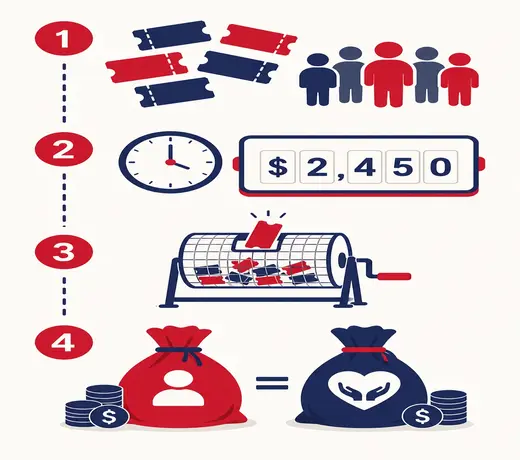
Prize Calculator
See what your 50/50 jackpot looks like at any ticket sales level.
Adjust the total sold and split percentage. The calculator updates instantly.
50/50 Prize Calculator
Total ticket sales ($)
Prize split
Total pot
$0
Winner receives
$0
Your cause receives
$0
Calculator shows gross proceeds before any payment processing fees. Actual amounts may vary based on your platform's fee structure. This is illustrative only not a guarantee of fundraising results.
Choosing the Right Format
50/50 is perfect for some situations. For others, it leaves money on the table.
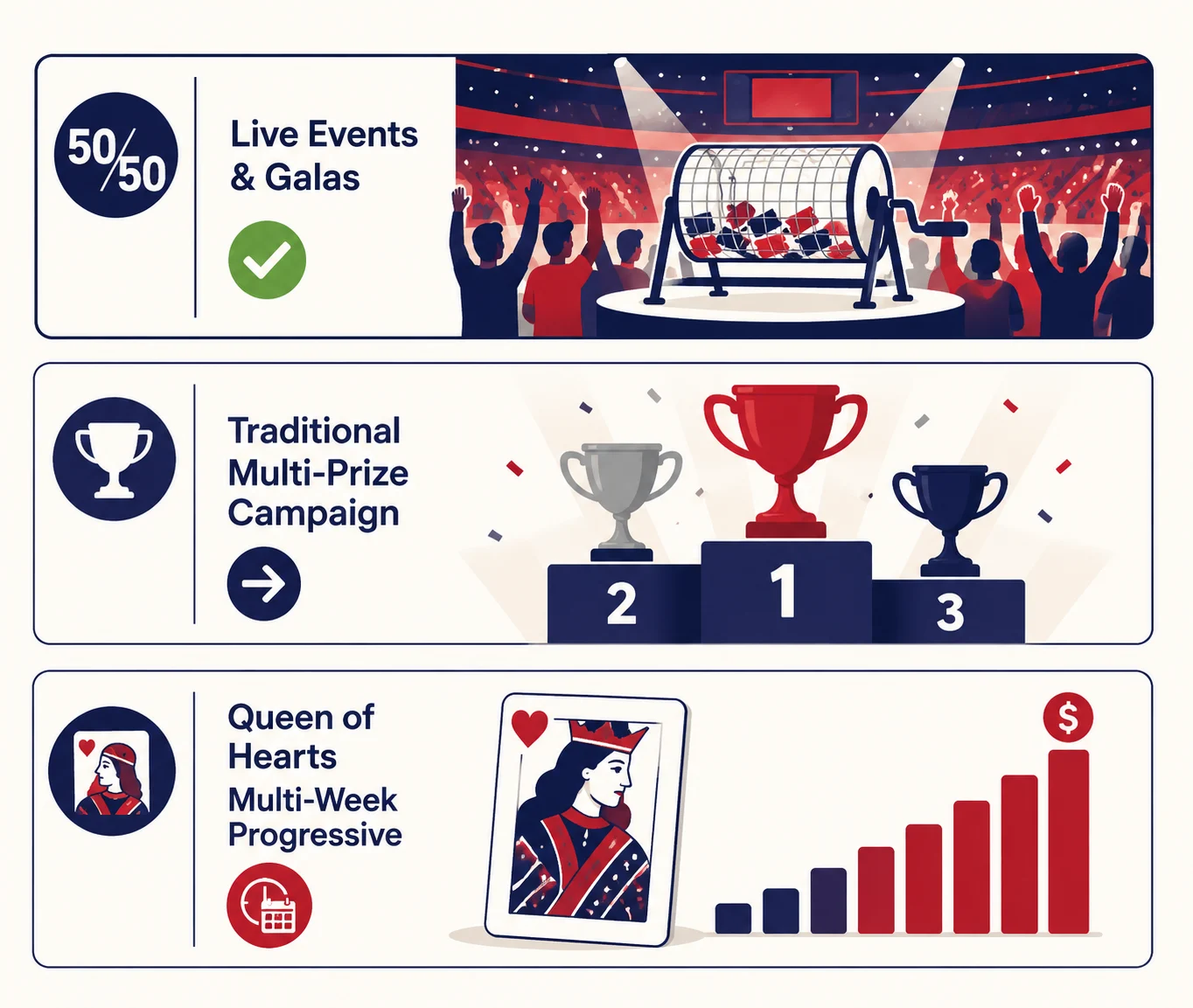
The 50/50 format wins on simplicity and speed. It is the right format when you need to run a raffle at an event without a lot of setup, when your audience responds better to cash prizes than prize items, or when you want something your volunteers can explain in one sentence. Where it has limits: the prize is always constrained by what you actually sell. If ticket sales are modest, the prize is modest. There is no prize package to anchor excitement the way a vacation or car does in a traditional raffle. And it doesn't build week-over-week momentum the way a Queen of Hearts can.
When 50/50 is the right callEvents with a captive audience sports games, banquets, school events, live concerts. Short-window fundraisers where setup time is limited. Audiences who respond better to "cash in your pocket" than prize items. Organizations running a raffle alongside a larger event where simplicity matters.
When to consider a different formatMulti-week campaigns where you want building engagement Queen of Hearts. Events where you want multiple winners and high excitement basket raffle. Any situation where you have compelling prize items that would anchor excitement better than a cash amount.
Common Questions
50/50 raffle questions we get every week.
How does a 50/50 raffle work?
All ticket revenue goes into a single pot. One ticket is drawn from all entries. The holder of that ticket wins half the pot the organization keeps the other half. The prize grows as more tickets are sold, which is part of what makes it exciting. The split doesn't have to be exactly 50/50 some organizations run 40/60 or 60/40 splits, depending on their goals and what their rules state.
Do I need a permit for a 50/50 raffle?
Requirements vary significantly by state. Many states require nonprofits to register before selling raffle tickets, including for 50/50 raffles. Some states have simplified licensing for small or event-based raffles. Chance2Win does not operate in Utah (which prohibits fundraising raffles) or Hawaii (which prohibits paid raffles). Raffle and charitable gaming laws vary by state this is not legal advice. Check our raffle laws by state guide or call us at (813) 699-9325.
Can I run a 50/50 raffle online?
Yes, with the right platform. Running a 50/50 online requires a system that can sell tickets digitally, calculate the live prize total as sales come in, and draw a verifiable winner. The free draw tool on this page handles the drawing from an existing list useful when you've already collected entries and just need a fair draw. If you need to sell tickets to the public online, Chance2Win's platform supports 50/50 raffles with live jackpot display, automated draws, and all the compliance tools you need.
Does the winner have to pay taxes on a 50/50 prize?
Raffle prizes are generally taxable income in the United States. For prizes over $600, the IRS typically requires the organization to report the winnings and provide the winner with a W-2G form. For prizes that might trigger significant tax liability, it is wise to disclose this in your official raffle rules so winners are not surprised. This is not tax advice consult a tax professional for guidance specific to your situation.
What if ticket sales are lower than expected?
This is the main operational risk of the 50/50 format if you sell fewer tickets than anticipated, both the prize and your fundraising total shrink proportionally. The best mitigation is having a realistic estimate of your audience size before you launch. Some organizations set a minimum ticket sales threshold before the raffle is valid, or pre-commit to a minimum prize to make it more compelling. Whatever floor you set must be in your official rules before tickets go on sale.